
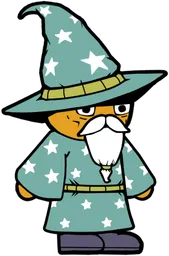
Wizard Dude
First-run spine- Slot
- 1
- Role
- AOE carry — fireballs without boss Trinket
AOE carry — fireballs without boss Trinket

How Many Dudes beginner guide: five-Dude drafts, Flyer picks, gold and Dude Juice economy, Ranch meta, and autobattler basics on Steam and mobile.
Autobattler loop, Flyer recruitment, Relics, and why team balance beats raw damage.
~9 min read
Sponsored
How Many Dudes? is a roguelike dudebuilder autobattler from Butterscotch Shenanigans, published Butterscotch Shenanigans on July 30, 2026 (Steam (PC) · iOS · Android · Steam Deck Verified). This how many dudes beginner guide covers the run loop most players miss on hour one: Flyer drafts, Relic shopping, and when to save Dude Juice instead of panic-reviving. Verified August 16, 2026 · Steam.
| Fact | Detail |
|---|---|
| Genre | Roguelike Autobattler · Dudebuilder · Single-player · Daily Dude · Ensemble Mode |
| Team size | 5 unique Dude Types per run |
| Roster | 42 Dude Types · 6 Families |
| Run modifiers | Hundreds of Relics (shop/events) · boss Trinkets per type |
| Challenge | Three Tiers of Challenge · Daily Dude · Ensemble Mode |
| Meta hub | Dude Ranch permanent unlocks between runs |
| Achievements | 69 Steam achievements |
| Price | $14.99 on Steam · mobile ~$9.99 |
Your opening minutes are a tutorial fight, then the real roguelike begins. Treat the first battle as a free stats screen — the game wants you to watch HP bars, DPS numbers, and how Toughness shrinks incoming hits.

AOE carry — fireballs without boss Trinket
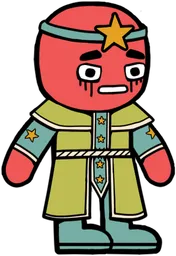
Pulse heal — swarm fight stabilizer
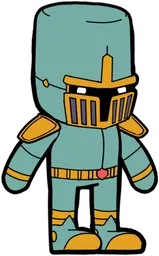
Repeating taunt — default front line
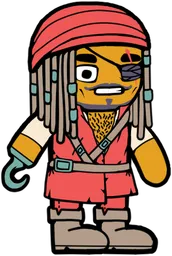
Opening taunt + Rum evasion flex

End-of-fight dividends for shop rerolls
A run is a chain of auto-fights separated by shopping and event nodes. Acts end with a boss that drops a Trinket slot upgrade for one Dude type on your roster. Enemy labels tell you both species and count — 287 Bees behaves very differently from one Gorilla, and the game expects you to read that before you click Fight.
Between nodes you usually choose a tougher pack for more money or a softer pack to preserve HP. Money funds shop rerolls and Ranch-side investments; HP funds your margin for mistakes. Early on, one lost Dude is recoverable if they go Unconscious instead of wiped — but only if you did not burn all your juice getting there.
Once you understand the node map, the next bottleneck is almost always recruitment — which is where Flyers come in.
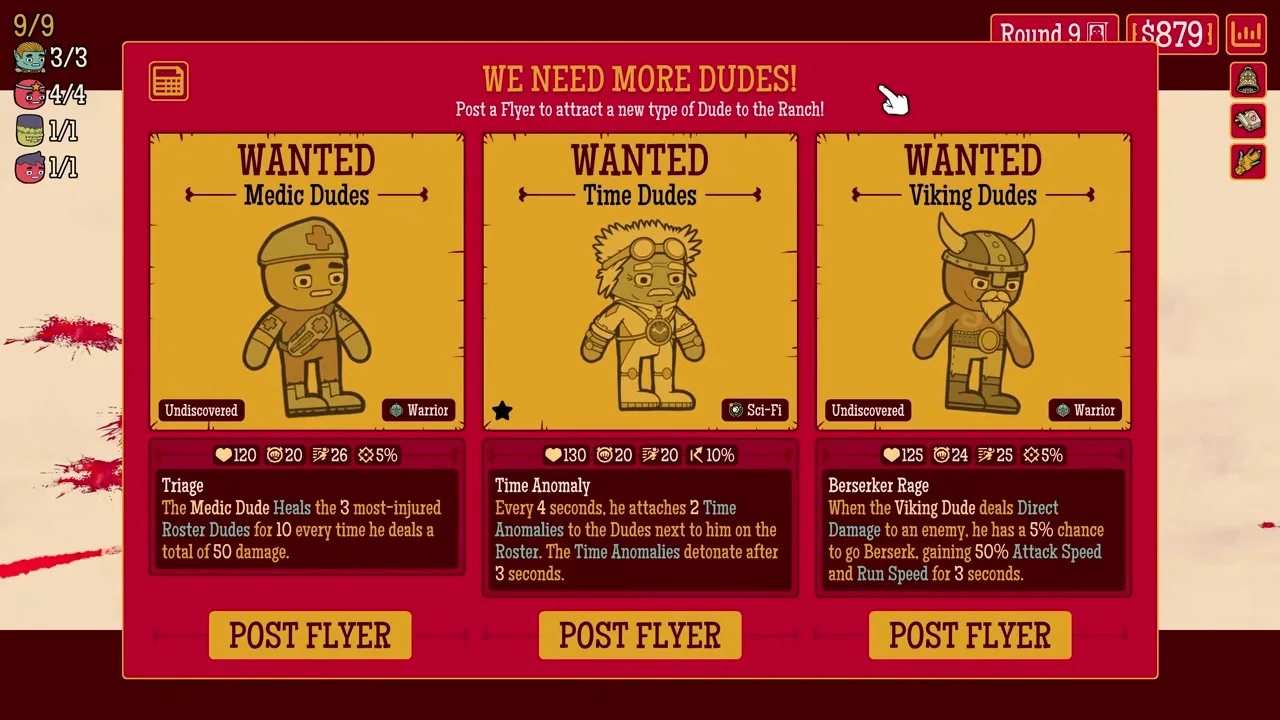
Flyers are the game's draft engine. Each one biases which Dude Types show up in recruitment windows and subtly shapes your Relic pool through Family tags. You are not picking a single character — you are picking a build lane for the next hour.
| Family | Beginner lane | Why pick it |
|---|---|---|
| Action | Burst damage | Fast clears if you stack cleave or crit |
| Employed | Economy + utility | Business Dude investments and Manager scaling |
| Fantasy | Spells + sustain | Wizard fireballs, Cleric pulses, Paladin blessings |
| Sci-Fi | Tech scaling | Trooper strikes, Hacker exploits, Cyborg stacking |
| Undead | Death triggers | Zombie explosions, Necrodude summons, Lich storage |
| Warrior | Frontline control | Knight taunts, Spartan blocks, Samurai pursuit |

Burst, crit, reposition, and cleave lanes.

Economy, threshold heals, and workplace archetypes.
Fireballs, pulse heals, blessings, and song stacks.

Orbitals, exploits, echoes, and tech scaling.

Death triggers, lifesteal, and summon loops.

Taunt pulses, blocks, and pursuit dashes.
You may field five unique Dude Types per run — two Wizards do not stack on one team. Every recruitment choice is opportunity cost. Passing on a healer Flyer because a damage type looks fun is the most common way to hit a wall at the first multi-target swarm.
Later Ranch unlocks let you pre-post Flyers in Ensemble Mode, essentially drafting a dream team before the run starts. Ignore this on day one; Classic mode teaches you which Families you actually finish runs with. When you unlock Ensemble, cross-check picks against the tier list so you are not pre-loading a cute but low-synergy squad.
Flyers decide who shows up — Relics decide whether those Dudes carry. That split is the whole mid-run game, covered next.
How Many Dudes? is an autobattler: once a fight starts, positioning, targeting, and ability triggers resolve on their own. Your job is everything before and between fights — draft, itemization, and risk selection.
| You choose | The game resolves |
|---|---|
| Team order on the roster bar | Dash paths, cleave angles, and who gets hit first |
| Relics and Trinkets | Proc chances, Stored damage, Heal splits, Taunt pulses |
| Which fight node to take | Enemy count, terrain traits, and reward tier |
| Consumables (when unlocked) | Mid-fight rerolls, revives, and emergency shields |
| Manual attack inputs | Nothing — there is no attack button |
Abilities hook into shared triggers: Direct Damage, Knockout, Move, Heal, Crit, Death, Taunt, and more. A Wizard's periodic fireball and a Ninja's crit shuriken look different on screen but both care about whether you stacked Attack Power, Crit Chance, or Run Speed on the roster. Read triggers in Dudex, not just the flavor text.
Taunt Dudes pull aggro to where they stand; Cowboy Dude Lassos allies to his tile; Agent Dude Dashes to endangered allies. Put fragile carries where tanks can intercept — usually above or below the front line depending on the ability. Reordering is free outside combat and costs nothing to experiment with.
Buildcraft beats reflexes here. The next section covers the resources that let you buy more build pieces.
Gold is run-scoped; Dude Juice revives Unconscious Dudes; Business Dude turns cash into compound interest if you meet his timing windows. Mis-spending either one ends runs faster than a bad Flyer.
| Resource | Best use | Trap to avoid |
|---|---|---|
| Cash | Shop Relics, Flyer rerolls, occasional event buys | Rerolling until broke before a boss you are underbuilt for |
| Dude Juice | Save a key Dude type before a boss | Juicing every Unconscious Dude in trash fights |
| Business investment | Lock money for multi-run payouts when the event appears | Investing cash you need for a critical shop this run |
| Consumables | Boss fights and bad node matchups | Hoarding them until the run ends unused |
Butterscotch's own beginner post puts it plainly: hold the Juice. Unconscious Dudes wake on a timer in many fights. Burning juice on a disposable scout Dude before a boss leaves you one wipe away from a hard loss. Juice is for saving your solo healer, your only taunt, or a carry with a boss Trinket attached.
One strong Relic that completes a trigger loop beats three mediocre ones. If the shop offers something that mentions your carry by name — Arcane Monocle for Wizard, Bandoleer for Cowboy, Bonfire for same-Family stacks — buy before you reroll chasing rarity. Full Relic indexing lives on the relics page; this guide only sets spending priority.
Economy feeds meta — Ranch upgrades widen future drafts more than one lucky shop ever will.
Matched by build plan, shared topics, and guide progression — not random related links.
Between runs you return to the Dude Ranch, spend permanent currency, unlock new Dude Types, enlarge Relic discovery, and open modes like Daily Dude. Think of it as the reason losing still progresses something.
Official guidance encourages jumping into higher Tiers for early Star payouts you can backfill later. If Tier 1 feels solved, test Tier 2 with a safer Family like Fantasy sustain or Warrior taunt walls. You learn boss patterns faster even when you lose.
Silver and Gold Stars mark mastery per Dude, Relic, and Trinket. They gate late Ranch tiers and Ensemble slots. Chasing Stars on one Family beats spreading unlocks randomly — see the ranch guide for upgrade order once you have a main team identity.
Ranch makes the next run easier; habits on this page make the current run survive — starting with the mistakes list below.
Most early losses are roster construction errors, not bad luck on crit rolls. Scan this table after a wipe before you rewrite your whole strategy.
| Mistake | Fix |
|---|---|
| Drafting five damage dealers | Add one taunt (Knight, Pirate) or pulse heal (Cleric, Medic) before Act 2 |
| Ignoring enemy count text | Take the safe node when the pack says hundreds of small hits |
| Juicing every knockout | Let trash-fight KOs recover; save juice for bosses |
| Rerolling shops dry | Buy one synergistic Relic, then reroll with a floor reserve |
| Chasing off-Family Relics | Relic pool follows Families — stay on-tag for shop density |
| Skipping Dudex tooltips | Click abilities before you buy; triggers are not obvious |
| Selling a Dude type mid-run | You cannot get that exact slot back — plan five roles upfront |
| Never visiting Ranch | Meta unlocks beat another restart with the same narrow pool |
Official tips say every Dude is strong in the right loop. That is true and misleading: Regular Dude's mob bonus needs multiple Regulars you cannot field under the five-unique-type rule, so he behaves like a weak pick unless Relics rewrite the rules. Context matters more than tier hype.
Fix the process mistakes first, then optimize picks on the tier list and builds hub.
Single-player · Daily Dude · Ensemble Mode. Daily Dude shares a seed leaderboard; Classic runs are solo.
5 unique Dude Types per run. Each type appears once; duplicates do not stack.
No. Combat is automatic. You draft, shop, order the roster, and pick nodes — the autobattler handles the rest.
Relics modify the whole run from shops and events. Trinkets drop from Act bosses and attach to one Dude type — see Relics and Trinkets.
Clear Tier 1 once, then mix in higher Tiers for Stars. You can backfill lower-tier Stars later per official guidance.
An older itch.io pre-alpha exists but is outdated. The Steam and mobile release is the current game.
The tier list for draft priority, then best builds for full team templates.
August 16, 2026
Matched by build plan, shared topics, and guide progression — not random related links.